A righteous man named Honi comes across another man planting a carob tree. When Honi asked how long it takes the tree to bear fruit, the man answered 70 years. Honi responded, “Are you certain you will live for another 70 years?”. The man explained that while he personally will not experience the literal fruits of his labor, he is planting the tree for future generations to enjoy. Honi then sat down, ate, and fell asleep. Rather than a brief nap, Honi woke up 70 years later to find a man gathering carob pods from the tree. He asked, “Are you the one who planted this tree?”. The man responded that no, it was his grandfather who planted the tree.
From what I understand, carob fruition takes closer to six or seven years rather than the decades described by the planter in the narrative. Despite this technicality, the carob tree still offers the same valuable lesson. They are slower to grow than other trees and continue to produce for over 100 years. The point is that the carob tree, much like our actions, is something that will impact future generations. A carob tree can feed someone 107 years after it is planted. Similarly, while we may not be around to experience the full result of our deeds, we are to try and make the world a better place for those who continue after us.
I love the symbology Jewish tradition has built around the carob, but it leaves one question:
What the hell is carob?
Those who remember the natural foods movement in the 70s probably already know from experience, but carob is a sweet and non-bitter legume often used as a healthy alternative to chocolate due to its lack of caffeine and theobromine. Despite the slight distraction of the 1980s and ’90s, crunchy culture has consumers once again focused on health and natural eating, making carob available in just about any form that has a chocolate equivalent (bars, chips, powders, etc.).
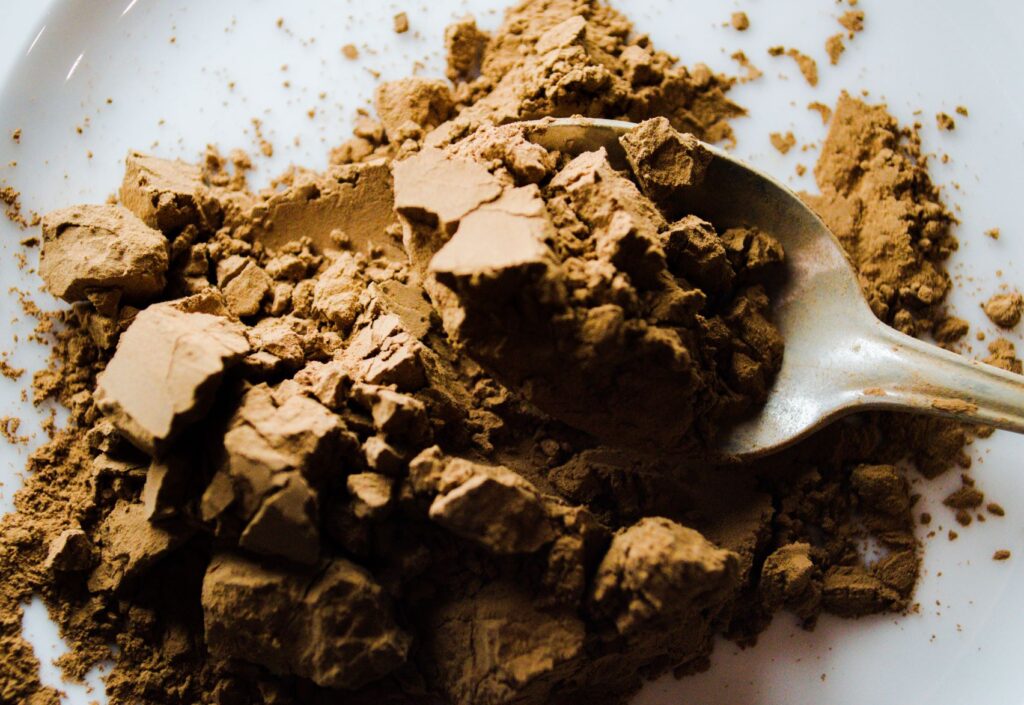
I am not entirely fooled. Carob does not replace chocolate, though with a little extra concocting it can hold one over if the cravings get rough. However, I do appreciate carob as its own flavor. While it cannot fully substitute the bliss of chocolate, the sweet-tasting pod offers a variety of delicious culinary possibilities.
Carob not only lacks caffeine but provides a number of other health benefits as well. Low fat. High in fiber. Lowers blood sugar. Improves cholesterol. Not to mention, it benefits general “gut health”. No, it’s not the miracle chocolate replacer that the mothers of the 1970s collectively used to bate and switch their children, but the healthy components of carob offer us the option to create unique and delectable snacks that satisfy our sweet tooth guilt-free.
For example: Carob and Berry Tarts.
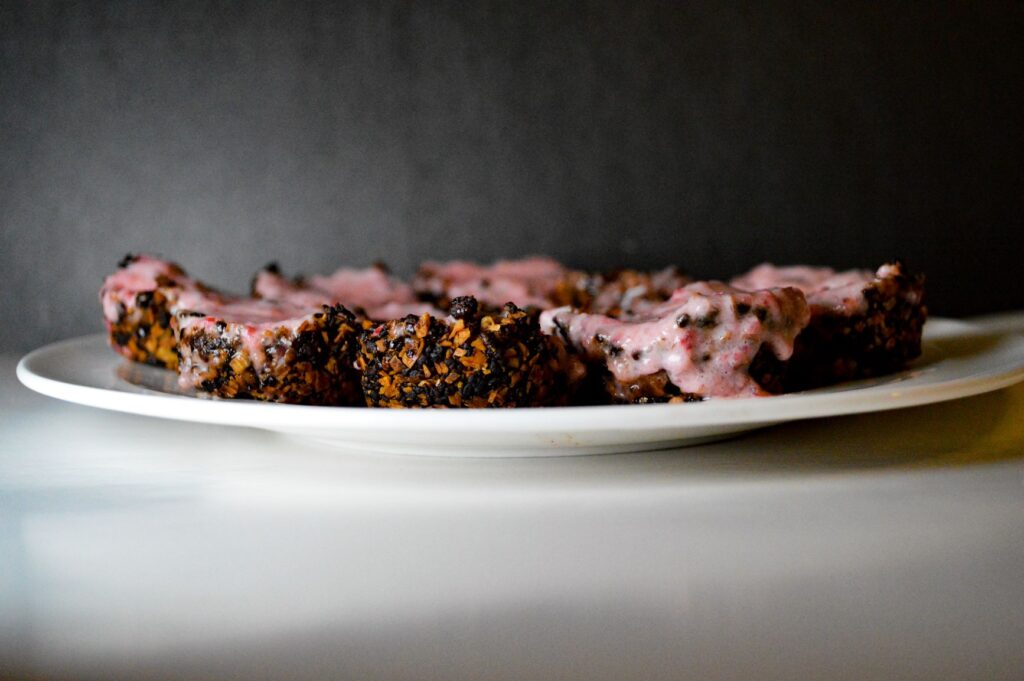
As I’m once again back to finding dairy-free and chocolate-free treats due to current dietary restrictions within the family, these seemed like a possible alternative when looking for something to whip up.
While the sweet and bitter-less carob is a featured ingredient, the flavor is further enhanced by dates, honey, and a berry spread. This time around, I chose strawberries as the base for the spread, primarily to embellish the tarts with a pinkish tint for Valentine’s day.
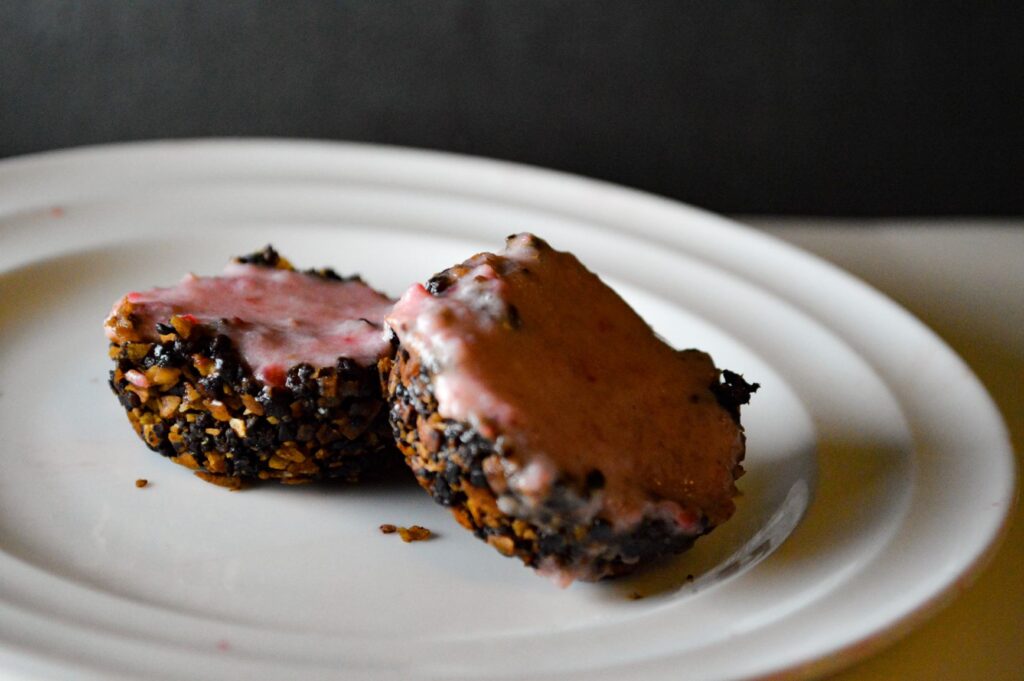
With that said, the most important thing to remember when making carob tarts:
After taking them out of the oven and allowing them to cool and form, don’t forget to share them with someone you love.
After all, it is almost Valentine’s day, and we never know how our simple acts of care and kindness will live on.
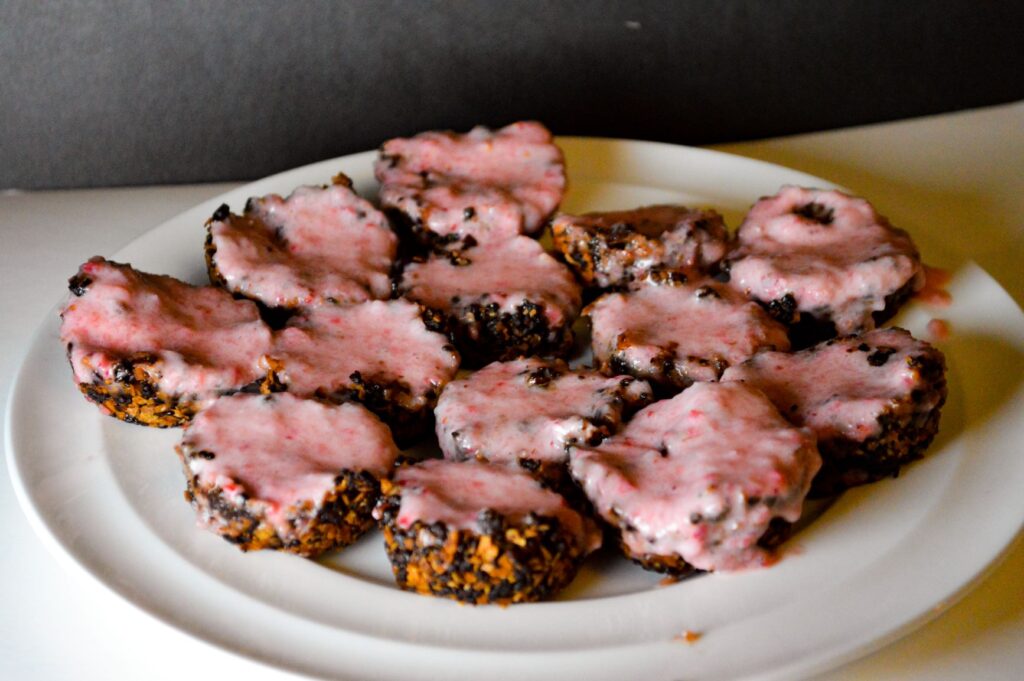

Carob Berry Tarts
Ingredients
- 1/2 Pound Strawberries (or any berry of your choice)
- 3 tbsp Coconut cream
- 2 tsp Honey
- 1/4 tsp Vanilla extract
- 10-12 Dates
- 1 Cup Coconut flakes
- 2 tbsp Carob powder
Instructions
- Preheat oven to 375 degrees F.
- In a blender or food processor, combine strawberries, coconut cream, honey, and vanilla until smooth. Place in refrigerator.
- Combine dates, coconut flakes, and carob powder in a blender or food processor. After a few minutes, the texture should be well ground and sticky.
- In a prepared muffin pan, spoon 2 tablespoons of the date mixture into each well (or 1 tablespoon if using a small pan). Place in oven and bake for 10-15 minutes.
- When finished baking, remove the muffin pan from the oven and allow it to completely cool (30 minutes to an hour). Pop the tarts out of the wells of the pan, and spread berry mix on top of them. If the spread is still runny, place in the fridge for another 30 minutes.
Originally posted February 2021
]]>Food plays such an intensely important role in our lives, and it isn’t just the fuel required to sustain us. Taste is an enjoyable phenomenon that can bring happiness to any moment. Unique ways of preparing food are a cultural foundation for all people. When friends and family come together they usually gather around food in some way, whether it’s a dinner party or chicken wings during a football game.
When we celebrate an event there is food. When a person mourns they are immediately provided with food from their loved ones. It is the most instinctive way we care for those we cherish, and preparing a meal for a guest is a simple way to honor them. Taking the time to choose dishes you know to be someone’s favorite, or putting in the effort to creatively and deliciously meet the dietary needs and/or restrictions of others can be an incredibly touching gesture.
I love everything about hosting. I love having friends that know our door is always open to their company. I love providing a feeling that my home is their home. I love feeding people. I love the sound of children giggling together in the playroom while the parents enjoy some adult time. I love providing a space to worship G-d through conversation and fellowship. My closest friends know that in my mind someone’s home can be their own personal ministry, and most people who spend significant amounts of time in my house know that I enjoy welcoming company, and I especially love feeding people. I don’t let you walk out of my door hungry if I can help it.
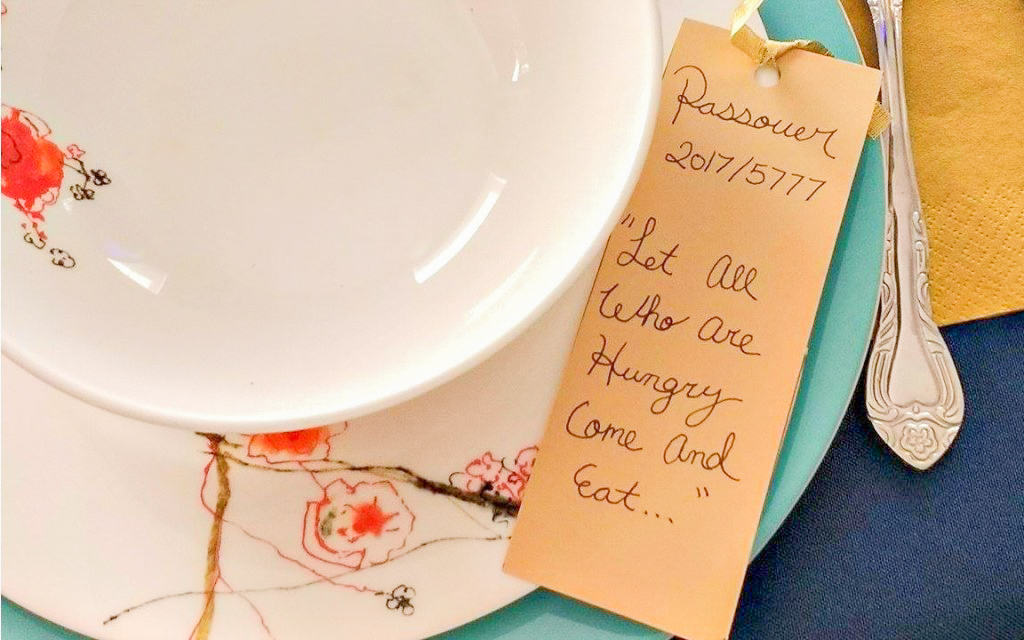
This is perhaps one of the reasons why Passover and Sukkot are my two favorite holidays. Both are home-based festivals that encourage an open door (or tent flap in the case of Sukkot) for guests. They are an exercise in extreme hospitality, and I feel completely in my element when I prepare for these awesome celebrations.
Naturally, the detail I tend to focus most on when it comes to inviting people into my house is food. What would they like? Are there any allergies or other dietary restrictions? What foods pair well with one another? Is this enough or should I throw in another dish? With Passover specifically, it can be even trickier. Some guests may have varying levels of observance regarding their regular religious food restrictions. On top of that, we have holiday-specific dietary needs (no leavened foods), and even within those restrictions, there are various levels of observances to consider. So every year I stick with relatively the same menu that I’ve perfected over time.
Matzo ball soup. Salad. Roasted vegetables. Curried fruit. A potato dish. Matzo kugel. Salmon. And a delicious brisket.
This year I finally figured out that a chocolate coconut mousse was the perfect dessert to go along with our Seder meal. It requires only a couple of ingredients, is very easy to whip up, and most importantly it is light, fluffy, and delicious. It will definitely appear on future Seder menus.
So, if you’re looking for a dessert that will feed people with any number of dietary restrictions, this mousse is perfect.
Chocolate Coconut Mousse
Ingredients
- 2 13.5 oz cans coconut milk
- 2 tbsp powderd sugar
- 5 tbsp cocoa powder
Instructions
- Scoop the cream at the top of the coconut milk into a bowl, and discard the rest of the liquid. Add sugar and beat together using an electric mixer until creamy and thick.
- Fold in the coco and continue beating. The mixture will begin to have a more fluffy texture.
- Place in the refrigerator to chill for an hour or two.