A righteous man named Honi comes across another man planting a carob tree. When Honi asked how long it takes the tree to bear fruit, the man answered 70 years. Honi responded, “Are you certain you will live for another 70 years?”. The man explained that while he personally will not experience the literal fruits of his labor, he is planting the tree for future generations to enjoy. Honi then sat down, ate, and fell asleep. Rather than a brief nap, Honi woke up 70 years later to find a man gathering carob pods from the tree. He asked, “Are you the one who planted this tree?”. The man responded that no, it was his grandfather who planted the tree.
From what I understand, carob fruition takes closer to six or seven years rather than the decades described by the planter in the narrative. Despite this technicality, the carob tree still offers the same valuable lesson. They are slower to grow than other trees and continue to produce for over 100 years. The point is that the carob tree, much like our actions, is something that will impact future generations. A carob tree can feed someone 107 years after it is planted. Similarly, while we may not be around to experience the full result of our deeds, we are to try and make the world a better place for those who continue after us.
I love the symbology Jewish tradition has built around the carob, but it leaves one question:
What the hell is carob?
Those who remember the natural foods movement in the 70s probably already know from experience, but carob is a sweet and non-bitter legume often used as a healthy alternative to chocolate due to its lack of caffeine and theobromine. Despite the slight distraction of the 1980s and ’90s, crunchy culture has consumers once again focused on health and natural eating, making carob available in just about any form that has a chocolate equivalent (bars, chips, powders, etc.).
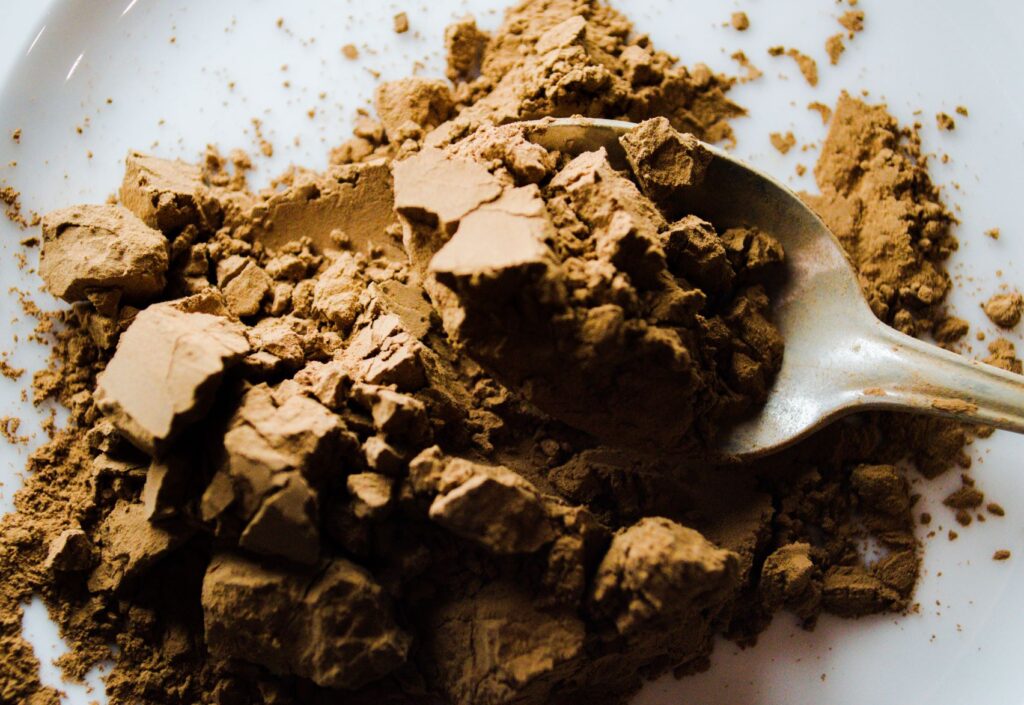
I am not entirely fooled. Carob does not replace chocolate, though with a little extra concocting it can hold one over if the cravings get rough. However, I do appreciate carob as its own flavor. While it cannot fully substitute the bliss of chocolate, the sweet-tasting pod offers a variety of delicious culinary possibilities.
Carob not only lacks caffeine but provides a number of other health benefits as well. Low fat. High in fiber. Lowers blood sugar. Improves cholesterol. Not to mention, it benefits general “gut health”. No, it’s not the miracle chocolate replacer that the mothers of the 1970s collectively used to bate and switch their children, but the healthy components of carob offer us the option to create unique and delectable snacks that satisfy our sweet tooth guilt-free.
For example: Carob and Berry Tarts.
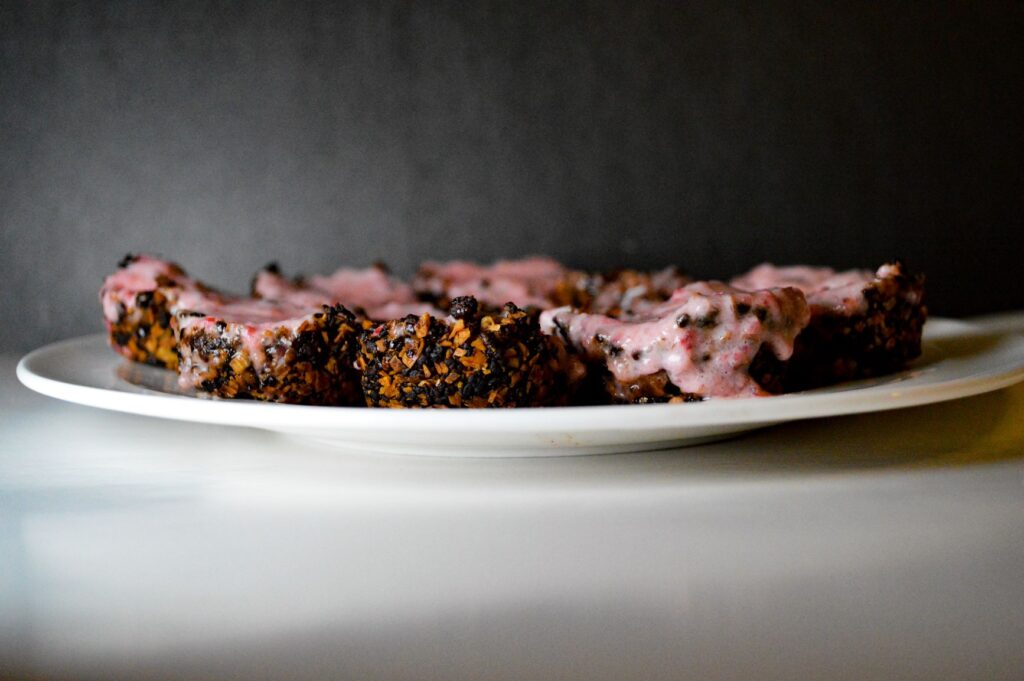
As I’m once again back to finding dairy-free and chocolate-free treats due to current dietary restrictions within the family, these seemed like a possible alternative when looking for something to whip up.
While the sweet and bitter-less carob is a featured ingredient, the flavor is further enhanced by dates, honey, and a berry spread. This time around, I chose strawberries as the base for the spread, primarily to embellish the tarts with a pinkish tint for Valentine’s day.
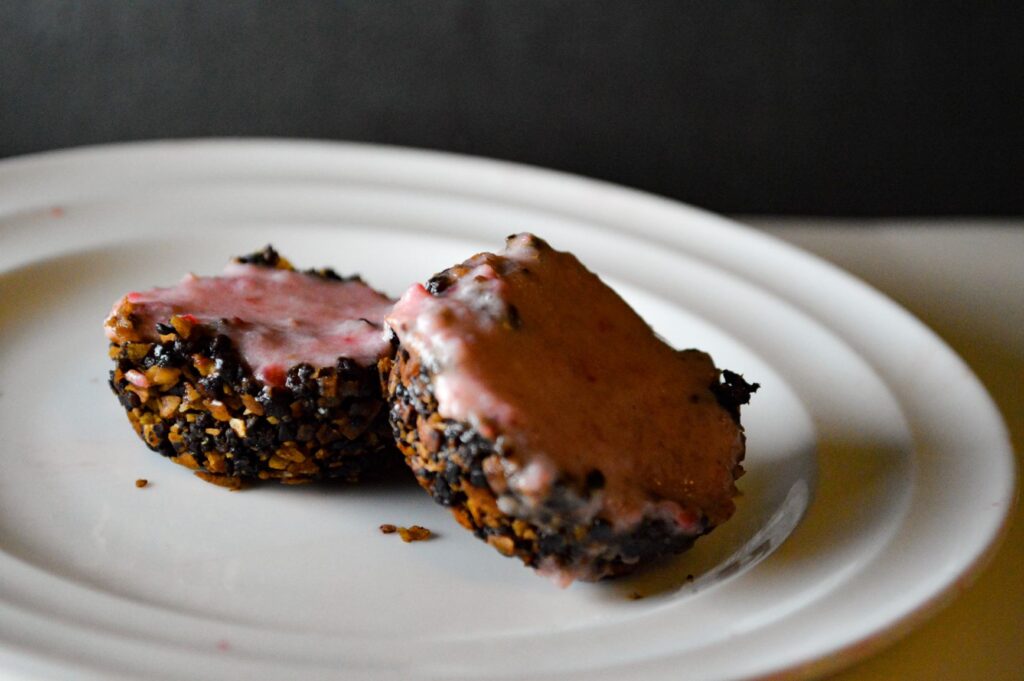
With that said, the most important thing to remember when making carob tarts:
After taking them out of the oven and allowing them to cool and form, don’t forget to share them with someone you love.
After all, it is almost Valentine’s day, and we never know how our simple acts of care and kindness will live on.
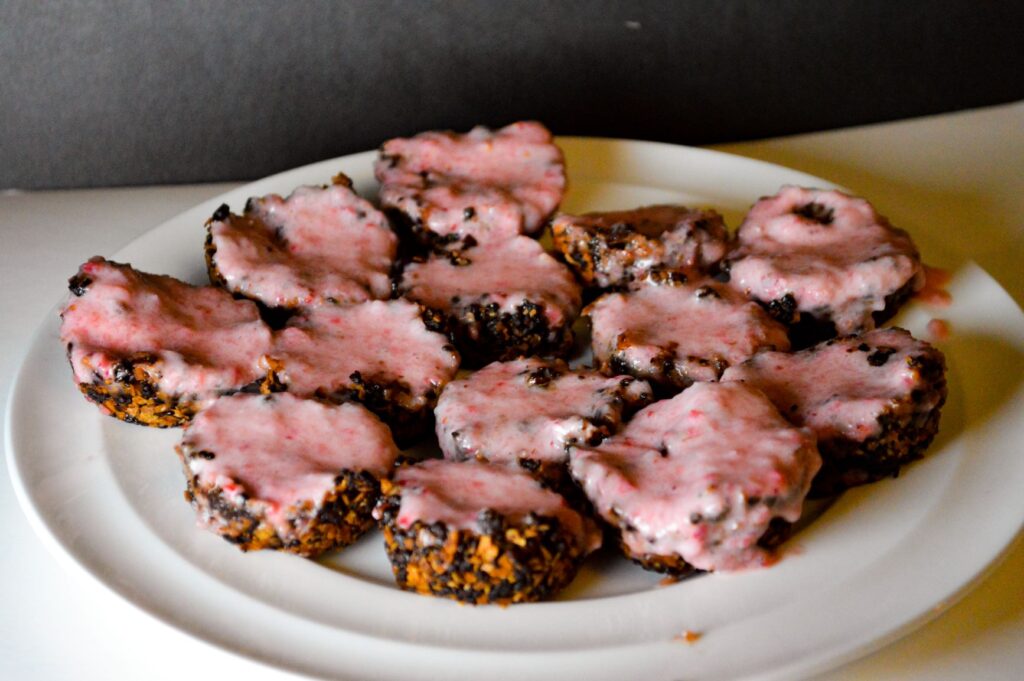

Carob Berry Tarts
Ingredients
- 1/2 Pound Strawberries (or any berry of your choice)
- 3 tbsp Coconut cream
- 2 tsp Honey
- 1/4 tsp Vanilla extract
- 10-12 Dates
- 1 Cup Coconut flakes
- 2 tbsp Carob powder
Instructions
- Preheat oven to 375 degrees F.
- In a blender or food processor, combine strawberries, coconut cream, honey, and vanilla until smooth. Place in refrigerator.
- Combine dates, coconut flakes, and carob powder in a blender or food processor. After a few minutes, the texture should be well ground and sticky.
- In a prepared muffin pan, spoon 2 tablespoons of the date mixture into each well (or 1 tablespoon if using a small pan). Place in oven and bake for 10-15 minutes.
- When finished baking, remove the muffin pan from the oven and allow it to completely cool (30 minutes to an hour). Pop the tarts out of the wells of the pan, and spread berry mix on top of them. If the spread is still runny, place in the fridge for another 30 minutes.
Originally posted February 2021
]]>It’s been a nice change! It not only takes some of the responsibility off of me, but it introduces a new dynamic of service by giving him the opportunity to make his sister’s food as well. In fact, The other day he made me a parfait after I exhaustedly flopped onto the couch post-house cleaning. It was such a sweet gesture.
So far these three ideas (along with the fruit taco we made a couple of weeks ago) have been our favorites. If you’re wanting to get your kiddo started in the kitchen, I recommend these simple but delicious snacks.
Pizza Bagel

My friend and I used to make these all the time as ravenous teenagers. Now it’s one of my go-to lunch ideas when we’re eating out of the car while road tripping. It’s simple enough for novice cooks, and if your child is ready for it they can even use the toaster to heat the bagel.
All they need to do is spread the pizza sauce (you can buy it in jars or a squeeze bottle), and top it with dried pepperoni, and mozzarella cheese.
Fruit Parfait
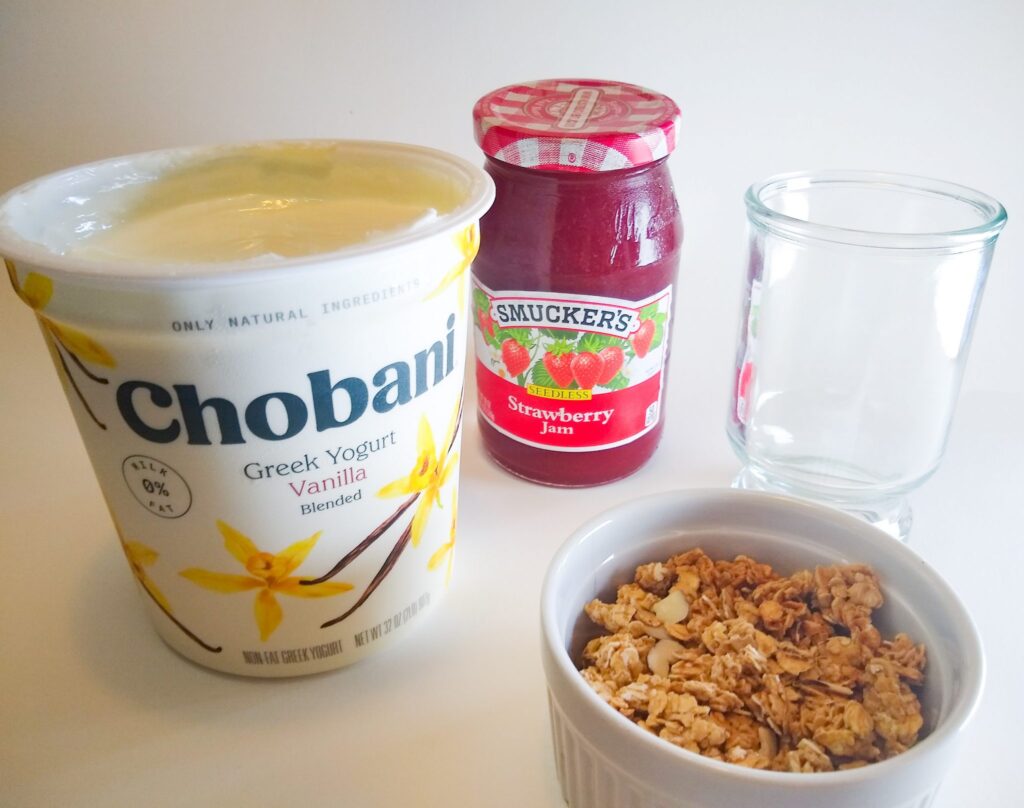
The kids loved this one! It’s a sweet treat, but yogurt is a great source of nutrition. At the bottom of a small glass, bowl, or cup layer a spread of fruit-flavored jam. The important thing when talking your kids through the instructions is to specify a particular amount of jam so as to guide them away from overloading the parfait with sugar (I told my kids to use a tablespoon). Fill the glass with vanilla yogurt, leaving about a quarter of it empty for the granola topping.
It’s delicious!
Apple Pizzas
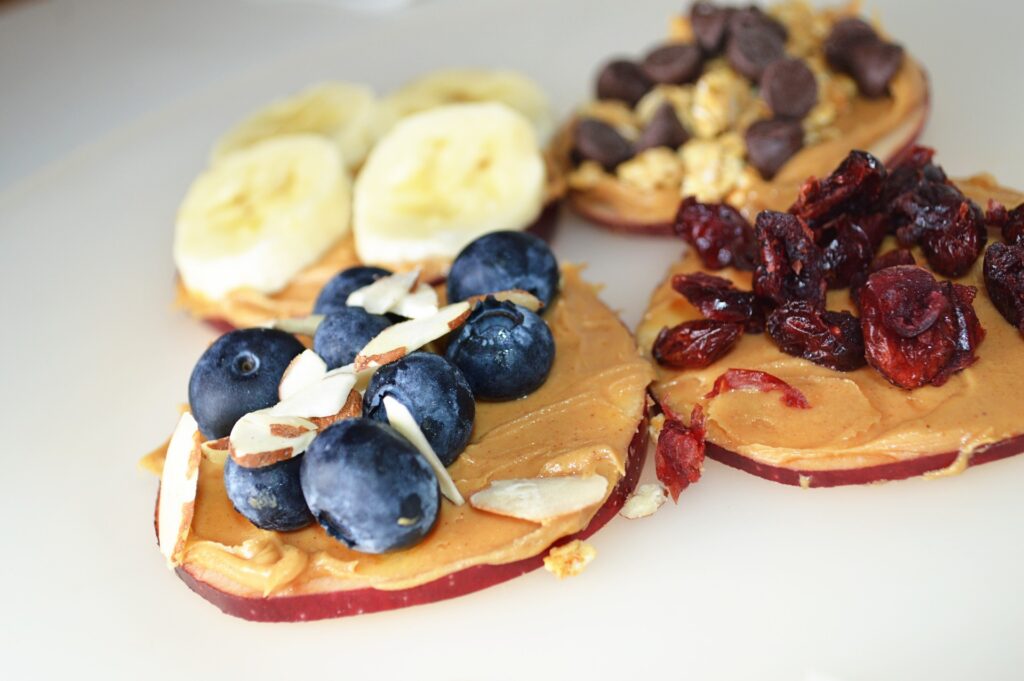
This is another sweet treat, but the variety has endless possibilities! To begin, show the kiddos how to slice up an apple. There are terrific kid-friendly knives out there that are safe for tiny and vulnerable fingers. I found mine through pampered chef, though I believe they’ve since discontinued those particular tools. You can find them in many
other places though! I highly recommend them if you want to get your kids involved in the kitchen.
On each apple slice, choose a spread as the base. We used peanut butter, but yogurt and other flavored butter are excellent choices as well. Sprinkle on embellishments such as fruits, nuts, raisins, and (if it’s a treat) chocolate chips.
Simple. Fun. And definitely yummy!

Originally posted August 2020
]]>For most of the meals and treats I make, one or both of them will stand beside me, ready to pour and mix ingredients (especially if it means a chance to lick a spoon). At this point, however, my six-year-old is showing signs of wanting more control over the kitchen for himself. When he decides he wants food, he’ll go in and make a sandwich or flavorsome toasted bread. He’s now tall enough for the microwave, and therefore finds any excuse to utilize it.
This makes sense to me. By eight or nine years old I remember learning how to make an omelet completely on my own, and from there I continued to build upon my cooking and baking abilities. He’s definitely getting to the age of independence.
I want to encourage this. Not only will it take a burden off of me when he’s able to put together a snack for himself and his sister, but it’s a skill he needs to develop. I want him to know his way around the kitchen, and I hope to foster his interest in making food.
I wanted to find a bunch of recipes specifically meant for children to prepare by themselves, but I was honestly disappointed with the options I came across. Sweet treats seemed to be the common theme for many of these recipes. While desserts are fun for special occasions, I want options I don’t mind him eating throughout the day. After all, this is something he doesn’t necessarily need permission to make. Of the healthier options I found, they mostly concentrated on arranging fruits, vegetables, and dip in cutesy designs. I don’t necessarily need a party platter here…just a little snack he can put some effort into whipping up.
So, it is now my mission to create a collection of recipes for small children. The idea is to essentially choose a snack for the week, demonstrating how to prepare it on Monday, leave the step-by-step instructions on the fridge, and allow him full reign when preparing that snack throughout the week. We’re in week one of trying this out and so far it’s going well.
It helps that I picked a great snack to start us out: Fruit Tacos.
The instructions are easy to follow and require little skill. As we continue building our recipe collection, the complicity will grow. For now, this is perfect! Even my 3 year old can do it.
Look out for more recipe ideas I have for little kids, and maybe I’ll even discuss some must-have kitchen gadgets that make cooking with kiddos both easier and safer.
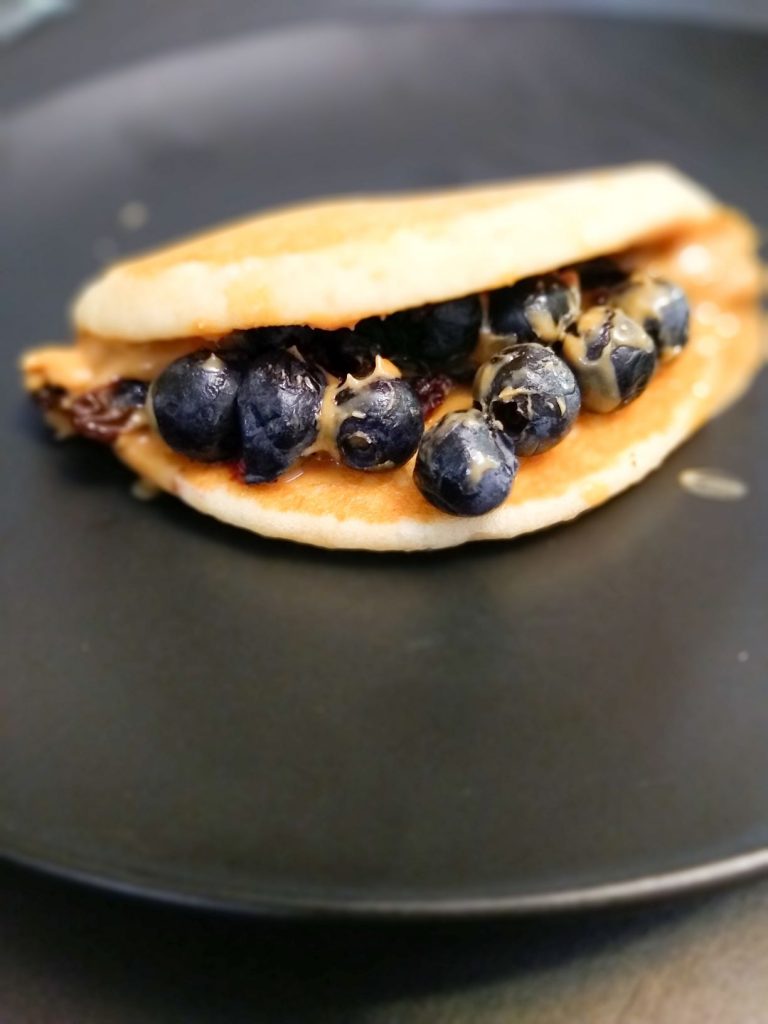

Fruit Taco
Ingredients
- Frozen pancakes
Spread Ideas
- Peanut butter or another nutty butter, yogurt, cream cheese, apple sauce, flavored butter (apple, pumpkin, etc.)
Fruits
- Strawberry, bananna, blueberry, raspberry, kiwi
Extras
- Raisins, nuts, coconut flakes, dried fruit,
Instructions
- Heat the pancake in either the microwave (30 seconds) or the toaster. Whichever your child is most comfortable doing on their own.
- Pick a spread and slather it across the pancake.
- Sprinkle fruits and other flavorful additions inside the pancake.
- Fold it up and enjoy!
It is hard finding healthy snacks! One of the difficult elements of my “job” is trying to keep up with appetites outside of mealtimes without resorting to foods heavy on sugar and sodium. I mean, for crying out loud, have you seen the ingredients in veggie straws? You know, that easy go-to snack we give our kids? That tiny bit of vegetable they use to justify their marketing is really a vehicle for salt. Similarly, it’s hard finding granola bars that are both delicious and lacking in chocolate of some kind. Of course, both of those choices are better than the goldfish crackers my kids tend to devour…but I digress.
I am constantly refilling my fridge with veggies and hummus, which is the easiest guilt-free snack I can keep around for the kiddos. But fresh vegetables are expensive considering the rate at which food is consumed in our house. I would also like to include more protein options that require little to no prep work on my part.
Peanut butter is honestly the unsung hero of snack food. It’s flavorful and packed with easy protein. Kids usually love it. And the best part is the versatility! I spread it on toast for breakfast. On apples, celery, or perhaps rice cakes for snacks. And who doesn’t love peanut butter and banana sandwiches when you’re looking for a special lunch option?
Recently I’ve scrambled to find snacks that meet current dietary restrictions. I need something filling and preferably packed with some type of nutrition. Protein bites seemed like an easy option, so I searched my pantry for the options. Most of these ingredients I find in bulk, making this easier on the wallet than constantly handing my kids “fresh” foods every time they announce they’re hungry. Not to mention, I originally tried this recipe with us adults in mind. The fact that the kids are now hooked on these things is a bonus. It’s a snack for literally any age!
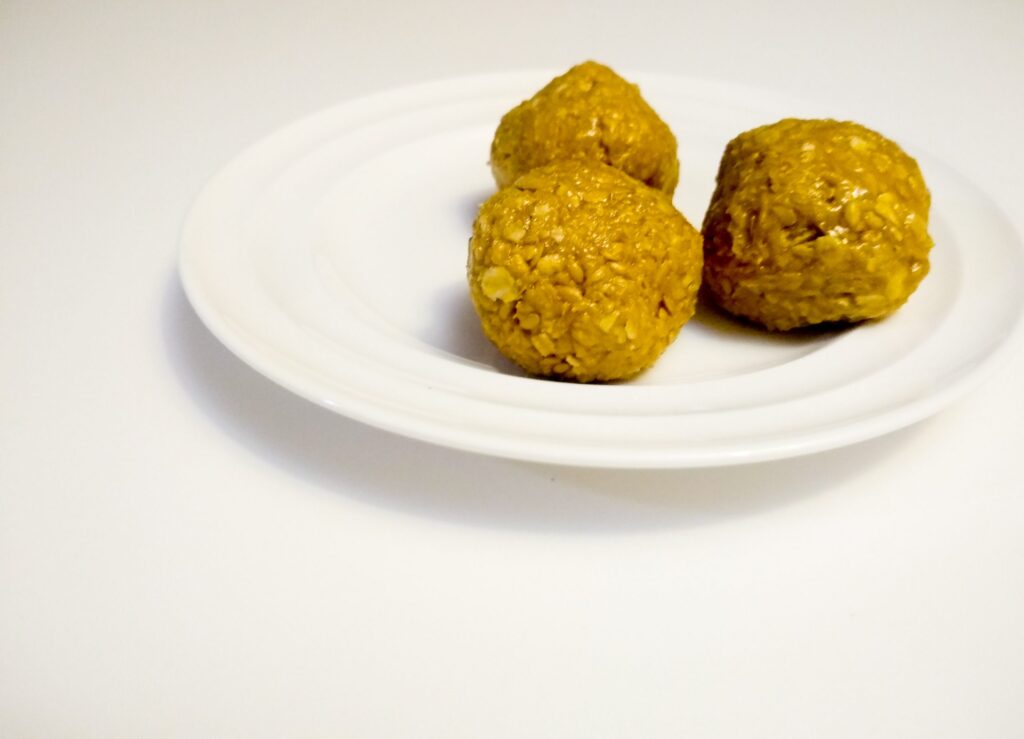
The unhealthiest thing about this recipe is the inclusion of honey for the purpose of flavor. Otherwise, it’s a delicious protein source you can feel good about feeding your family.
The flaxseed is optional, though for those who do not have an allergy this is a terrific source of omega 3 fatty acids (good fats!) and fiber. It’s been shown to reduce the risks of cancer, heart disease, stroke, diabetes, and potentially inflammation (supposedly. I’m not a doctor). Definitely an added bonus to snack time!

5 Ingredients Protein Bites
Ingredients
- 1 Cup Peanut Butter
- 1 Cup Old Fashioned Oats
- 1/2 Cup Coconut Flakes
- 1/2 Cup Flax Seeds
- 3 Tbsp Honey
Instructions
- Using a stand or hand mixer, combine all ingredients together until well combined.
- Once combined, roll a spoonful of the mix between hands to form a ball.
- Once all of the bites are formed. Place them in the refrigerator to harden. Enjoy after 2-4 hours!